Pterosauria
Pterosaurs are an extinct clade of warm-blooded flying reptiles in the order Pterosauria. They existed during most of the Mesozoic: from the Late Triassic to the end of the Cretaceous. Pterosaurs are the earliest vertebrates known to have evolved powered flight. Their wings were formed by a membrane of skin, muscle, and other tissues stretching from the ankles to a dramatically lengthened fourth finger.

Matt Martyniuk · CC BY 3.0 · via Wikipedia/Commons. May be a photograph of a specimen, or an artist’s reconstruction — an interpretation of a skeleton, since colour and soft tissue are almost never preserved.
On record
Recorded, not inferred- Also called
- pterosaurPBDB
- Sits inside
- PterosauromorphaPBDB
- Diet
- piscivorePBDB
- Life habit
- volantPBDB
- Motility
- actively mobilePBDB, for Osteichthyes
- Environment
- marinePBDB
Time the record covers
At least 155 million years on record.
The record covers at least 227.3 Mya to 72.2 Mya. No occurrence read is dated outside 237 Mya to 66 Mya.
1,162 occurrences of Pterosauria on record, most of them in the Early Cretaceous. The Paleobiology Database records this as a living group, and the chart stops with its fossils rather than at the present. Bar height is expected occurrences, not a count: each fossil is spread across the span it is dated to, so a tall narrow bar means tight dating and a low wide one means loose.
When
1,162 occurrences- Late Triassic4%
- Early Jurassic6%
- Middle Jurassic6%
- Late Jurassic19%
- Early Cretaceous38%
- Late Cretaceous29%
These are dates about fossils, not the animal: the record can only begin after it arose and end before it died out, so either end may reach further. Shares are expected occurrences: a fossil dated to a span is counted partly in each period it straddles. More on what this infers.
Found in
301 formations
- West Melbury Marly Chalk Formation · Chalk Group50
- Posidonia Shale Formation46
- Romualdo Formation · Santana Group43
- Niobrara Formation · Colorado Group34
- Morrison Formation29
- Jiufotang Formation · Jehol Group28
Loading coastlines…
The named rock units Pterosauria has been recovered from, largest first. Drawn where the rock is now, not where it formed. 277 further formations hold fewer occurrences each and are not listed. 134 occurrences have no formation on record, which is common for older literature.
Pterosauria and its relatives
Early CretaceousWhere Pterosauria and its relatives were recorded in the Early Cretaceous.
Found in the same rock
1,903 taxa- Theropoda71 sites
- Testudines34 sites
- Sauropoda31 sites
- Dromaeosauridae25 sites
- Osteichthyes24 sites
- Crocodylia23 sites
- Squamata23 sites
- Pterodactyloidea22 sites
- Anura21 sites
- Lepidotes21 sites
- Mammalia19 sites
- Dorygnathus banthensis18 sites
- Ornithopoda16 sites
- Caudata15 sites
- Dinosauria15 sites
- Gastropoda15 sites
- Goniopholididae15 sites
- Azhdarchidae14 sites
- Ornithocheiridae14 sites
- Stegosauria14 sites
- Ankylosauria13 sites
- Plantae13 sites
- Albanerpetontidae12 sites
- Coelurosauria12 sites
The Paleobiology Database records 828 sites for Pterosauria, and this reads 240 of them. The number is how many of those sites it was catalogued from too. The 24 sharing the most are listed.
This is not a list of everything alive at the time. It is only what has come out of the same ground as this animal and been written down.
Entered from
672 references- The Early Jurassic pterosaur Dorygnathus banthensis (Theodori, 1830)29
- Die Rhamphorhynchoidea (Pterosauria) der Oberjura-Plattenkalke Süddeutschlands, Teil II, Systematische Beschreibung21
- Seeley, 187021
- Seeley, 186917
- The Early Jurassic pterosaur Campylognathoides Strand, 192814
- Pteranodon (Reptilia: Pterosauria): stratigraphic distribution and taphonomy in the lower Pierre Shale Group (Campanian), western South Dakota and eastern Wyoming14
- Die Pterodactyloidea (Pterosauria) der Oberjura-Plattenkalke Süddeutschlands [The Pterydactyloidea (Pterosauria) of the Upper Jurassic plattenkalks of southern Germany]13
- Pterosaurs of the Wessex Formation (Earl Cretaceous, Barremian) of the Isle of Wight, southern England: a review with new data11
- Mid-Cretaceous ornithocheirids (Pterosauria, Ornithocheiridae) from Russia and Uzbekistan11
- Morphology and taxonomy of Quetzalcoatlus Lawson 1975 (Pterodactyloidea: Azhdarchoidea)10
- New records of azhdarchids (Pterosauria, Azhdarchidae) from the Late Cretaceous of Russia, Kazakhstan, and Central Asia10
- Palaeontology of the Purbeck-type (Tithonian, Late Jurassic) bonebeds of Chassiron (Oléron Island, western France)9
Each of the 1,162 occurrences read was entered from one of these publications, ordered by how many each accounts for. This is not a search for papers mentioning the name. 660 further references are not listed. Entries link to doi.org where the Paleobiology Database holds an identifier, and to its own record where it does not. Relayed as the Paleobiology Database holds them, not checked against what they resolve to.
Media and terms
Media content3

Picture of Pterosauria
- Source
- Wikipedia/Commons
- Credit
- Matt Martyniuk
- Licence
- CC BY 3.0
- Commercial use
- the licence allows it
Photogrammetry
- Source
- MorphoSource
- Credit
- Museum of Zoology
- Licence
- not stated by the source
- Commercial use
- cannot be read from the licence given — check the record
- Specimen
- Pterosauria indet. · mzusp
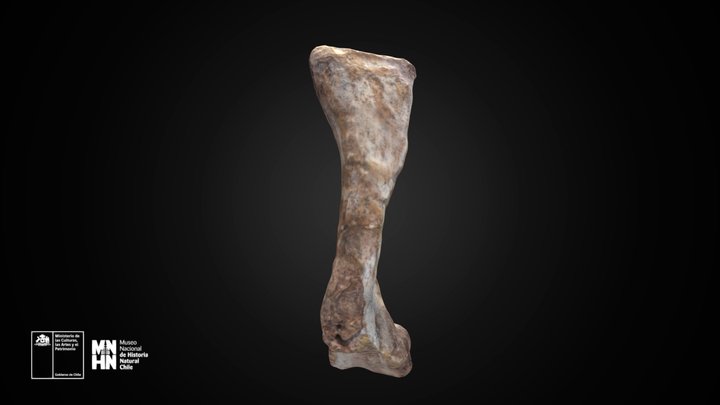
3D model
- Source
- Sketchfab
- Licence
- CC Attribution-NonCommercial-ShareAlike
- Commercial use
- the licence does not allow it
The description on this site
- Source
- Wikipedia, “Pterosaur”
- Licence
- CC BY-SA 4.0
This is what the site found, which is not the same as what exists.
Keep going
What may have been alongside itPterosauromorpha through timeFormations of the Early CretaceousThe world it lived on
Occurrence data from the Paleobiology Database, CC BY 4.0. (Kaup 1834)