Encrinuridae
Encrinuridae is a family of trilobite within the order Phacopida that lived in what would be Africa, Asia, Australia, Europe, North America, and South America from the middle Ordovician to the early Devonian from 479 to 412.3 million years ago, existing for approximately 66.7 million years.

Squalicorax1234 · CC BY-SA 3.0 · via Wikipedia/Commons. May be a photograph of a specimen, or an artist’s reconstruction — an interpretation of a skeleton, since colour and soft tissue are almost never preserved.
On record
Recorded, not inferred- Sits inside
- CheirurinaPBDB
- Diet
- carnivorePBDB, for Trilobita
- Life habit
- low-level epifaunalPBDB, for Trilobita
- Motility
- fast-movingPBDB, for Trilobita
- Environment
- marinePBDB, for Trilobita
Time the record covers
At least 51 million years on record.
The record covers at least 471.3 Mya to 419.62 Mya. No occurrence read is dated outside 481.7 Mya to 413.02 Mya.
1,397 occurrences of Encrinuridae on record, most of them in the Ordovician. Bar height is expected occurrences, not a count: each fossil is spread across the span it is dated to, so a tall narrow bar means tight dating and a low wide one means loose.
When
1,397 occurrences- Ordovician52%
- Silurian48%
- Devonianunder 1%
These are dates about fossils, not the animal: the record can only begin after it arose and end before it died out, so either end may reach further. Shares are expected occurrences: a fossil dated to a span is counted partly in each period it straddles. More on what this infers.
Found in
368 formations
- Cape Phillips Formation66
- Jupiter Formation · Anticosti Group59
- Whittaker Formation54
- Kopanina Formation32
- Esbataottine Formation29
- Delorme Formation22
Loading coastlines…
The named rock units Encrinuridae has been recovered from, largest first. Drawn where the rock is now, not where it formed. 344 further formations hold fewer occurrences each and are not listed. 96 occurrences have no formation on record, which is common for older literature.
Encrinuridae and its relatives
OrdovicianWhere Encrinuridae and its relatives were recorded in the Ordovician.
Found in the same rock
2,487 taxa- Encrinurus81 sites
- Calymene46 sites
- Crinoidea44 sites
- Favosites39 sites
- Bryozoa37 sites
- Atrypa35 sites
- Gastropoda34 sites
- Illaenus31 sites
- Skenidioides31 sites
- Remopleurides30 sites
- Ostracoda28 sites
- Stenopareia28 sites
- Brachiopoda27 sites
- Heliolites26 sites
- Leptaena26 sites
- Bumastus25 sites
- Sowerbyella25 sites
- Trilobita25 sites
- Leonaspis24 sites
- Bivalvia23 sites
- Platystrophia23 sites
- Dolerorthis22 sites
- Lonchodomas22 sites
- Nautiloidea22 sites
The Paleobiology Database records 1,025 sites for Encrinuridae, and this reads 240 of them. The number is how many of those sites it was catalogued from too. The 24 sharing the most are listed.
This is not a list of everything alive at the time. It is only what has come out of the same ground as this animal and been written down.
Entered from
323 references- Early Silurian trilobites of Anticosti Island, Québec, Canada74
- Silurian encrinurine trilobites from the central Canadian Arctic61
- Correlation of the Silurian rocks of China43
- The Ashgill Trilobites of the Oslo Region, Norway32
- Revision of the Silurian encrinurine trilobite Wallacia Lamont 1978, with species from Gotland and Canada29
- Trilobite faunas of the Duncannon Group: Caradoc stratigraphy, environments and palaeobiogeography of the Leinster Terrane, Ireland22
- Trilobites from the Ordovician Balclatchie and lower Ardwell groups of the Girvan district, Scotland22
- Ordovician Sedimentary Basin and Paleobiotas of the Gorny Altai21
- The Middle Ordovician of the Oslo Region, Norway 7. Trilobites of the suborder Cheirurina20
- Animal and plant communities of Podolia19
- Australian communities19
- Scottish Silurian trilobites18
Each of the 1,397 occurrences read was entered from one of these publications, ordered by how many each accounts for. This is not a search for papers mentioning the name. 311 further references are not listed. Entries link to doi.org where the Paleobiology Database holds an identifier, and to its own record where it does not. Relayed as the Paleobiology Database holds them, not checked against what they resolve to.
Media and terms
Media content2

Picture of Encrinuridae
- Source
- Wikipedia/Commons
- Credit
- Squalicorax1234
- Licence
- CC BY-SA 3.0
- Commercial use
- the licence allows it
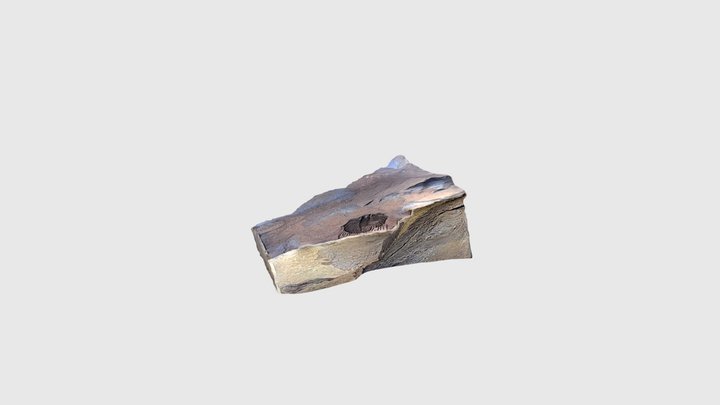
3D model
- Source
- Sketchfab
- Credit
- Adrian Gyllingberg
- Licence
- CC Attribution-NonCommercial-ShareAlike
- Commercial use
- the licence does not allow it
The description on this site
- Licence
- CC BY-SA 4.0
This is what the site found, which is not the same as what exists.
Keep going
What may have been alongside itCheirurina through timeFormations of the OrdovicianThe world it lived on
Occurrence data from the Paleobiology Database, CC BY 4.0. Angelin 1854