Rugosa
Searched as Rugosa indet.. The Paleobiology Database treats Rugosa as the accepted name.

Uncredited · via Wikidata/Commons. May be a photograph of a specimen, or an artist’s reconstruction — an interpretation of a skeleton, since colour and soft tissue are almost never preserved.
On record
Recorded, not inferred- Also called
- horn coralPBDB
- Sits inside
- HexacoralliaPBDB
- Diet
- suspension feederPBDB
- Life habit
- epifaunalPBDB
- Motility
- stationary, attachedPBDB
- Vision
- blindPBDB, for Anthozoa
- Environment
- marinePBDB
Time the record covers
At least 204 million years on record.
The record covers at least 458.2 Mya to 254.14 Mya. No occurrence read is dated outside 538.8 Mya to 66 Mya.
796 occurrences of Rugosa on record, most of them in the Devonian. The Paleobiology Database records this as a living group, and the chart stops with its fossils rather than at the present. Bar height is expected occurrences, not a count: each fossil is spread across the span it is dated to, so a tall narrow bar means tight dating and a low wide one means loose.
When
796 occurrences- Cambrianunder 1%
- Ordovician7%
- Silurian33%
- Devonian40%
- Carboniferous14%
- Permian7%
- Early Triassicunder 1%
- Middle Triassicunder 1%
- Late Triassicunder 1%
- Early Jurassicunder 1%
- Middle Jurassicunder 1%
- Late Jurassicunder 1%
- Early Cretaceousunder 1%
- Late Cretaceousunder 1%
These are dates about fossils, not the animal: the record can only begin after it arose and end before it died out, so either end may reach further. Shares are expected occurrences: a fossil dated to a span is counted partly in each period it straddles. More on what this infers.
Found in
257 formations
- Racine Formation52
- High Tor Limestone Formation40
- Solvik Formation16
- Scotch Grove Formation12
- Martin Formation11
- Mount Ida Formation11
Loading coastlines…
The named rock units Rugosa has been recovered from, largest first. Drawn where the rock is now, not where it formed. 233 further formations hold fewer occurrences each and are not listed. 119 occurrences have no formation on record, which is common for older literature.
Rugosa and its relatives
DevonianWhere Rugosa and its relatives were recorded in the Devonian.
Found in the same rock
1,653 taxa- Crinoidea90 sites
- Fenestella65 sites
- Bryozoa57 sites
- Punctospirifer45 sites
- Spirifer44 sites
- Leptaena40 sites
- Schuchertella39 sites
- Ostracoda38 sites
- Atrypa37 sites
- Platyceras37 sites
- Rhipidomella37 sites
- Rhombopora37 sites
- Brachiopoda34 sites
- Cleiothyridina34 sites
- Cystodictya33 sites
- Platycrinites32 sites
- Favosites31 sites
- Fistulipora31 sites
- Barycrinus28 sites
- Fenestrata28 sites
- Hustedia27 sites
- Camarotoechia26 sites
- Polypora26 sites
- Porifera26 sites
The Paleobiology Database records at least 872 sites for Rugosa, and this reads 240 of them. The number is how many of those sites it was catalogued from too. The 24 sharing the most are listed.
This is not a list of everything alive at the time. It is only what has come out of the same ground as this animal and been written down.
Entered from
234 references- Fossil associations in the High Tor Limestone (Lower Carboniferous) of South Wales40
- The Silurian (Wenlockian) reef fauna of Southeastern Wisconsin35
- Caradocian-Gedinnian echinoderm associations of Central and Eastern North America29
- Devonian Athyrid Brachiopods from the Cantabrian Zone (NW Spain)20
- Drowning, extinction, and subsequent facies development of the Devonian Hönne Valley Reef (northern Rhenish Massif, Germany)19
- Paleoecology and stratigraphy of Devonian sediments in the northern Andes, Colombia: paleogeographic implications [Unpublished Ph.D. thesis, University of Chicago]19
- Silurian communities of the Oslo Region, Norway18
- Silurian brachiopod and related benthic communities from carbonate platform and mound environments of Iowa and surrounding areas18
- Evolution of Silurian Pentamerid Communities in Wisconsin18
- Khayznikova, 198916
- The Silurian and Early Devonian Faunas of the Heathcote District, Victoria16
- Biotic Interaction Versus Abiotic Response as Mediators of Biodiversity in the Middle Devonian (Givetian) Upper Hamilton Group of New York State14
Each of the 796 occurrences read was entered from one of these publications, ordered by how many each accounts for. This is not a search for papers mentioning the name. 222 further references are not listed. Entries link to doi.org where the Paleobiology Database holds an identifier, and to its own record where it does not. Relayed as the Paleobiology Database holds them, not checked against what they resolve to.
Media and terms
Media content2
Picture of Rugosa
- Source
- Wikidata/Commons
- Credit
- nobody named on the record
- Licence
- not stated by the source
- Commercial use
- cannot be read from the licence given — check the record
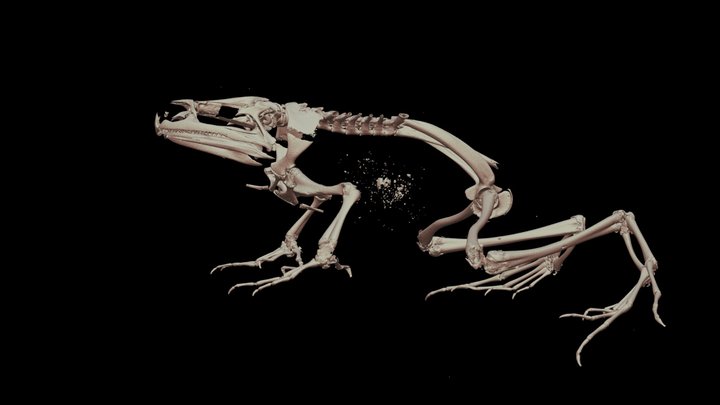
3D model
- Source
- Sketchfab
- Licence
- CC Attribution-NonCommercial-ShareAlike
- Commercial use
- the licence does not allow it
Smithsonian Open Access and MorphoSource were not reached for this taxon, so this list is what the others held rather than everything there is.
This is what the site found, which is not the same as what exists.
Keep going
What may have been alongside itHexacorallia through timeFormations of the DevonianThe world it lived on
Occurrence data from the Paleobiology Database, CC BY 4.0. (Milne-Edwards and Haime 1850)