Cervalces
Cervalces is an extinct deer genus that lived during the Pliocene and Pleistocene epochs. Cervalces gallicus is either classified as a species of the related Libralces, or an ancestral species to other members of Cervalces. It lived in Europe from the Pliocene to the Pleistocene. Cervalces scotti, the stag-moose, lived in Pleistocene North America. Cervalces latifrons, the broad-fronted moose, and Cervalces carnutorum were found in Pleistocene Europe and Asia. The genus has been suggested to be paraphyletic and ancestral with respect to Alces, the genus which contains the modern moose, and as such, some authors synonymise Cervalces with Alces.

Staka · CC BY-SA 4.0 · via Wikipedia/Commons. May be a photograph of a specimen, or an artist’s reconstruction — an interpretation of a skeleton, since colour and soft tissue are almost never preserved.
On record
Recorded, not inferred- Also called
- stag moosePBDB
- Sits inside
- CervidaePBDB
- Diet
- grazer, browserPBDB, for Cervidae
- Life habit
- ground dwellingPBDB, for Cervidae
- Motility
- actively mobilePBDB, for Osteichthyes
- Environment
- terrestrialPBDB, for Artiodactyla
Time the record covers
At least 645 thousand years on record.
The record covers at least 774 ka to 129 ka. No occurrence read is dated outside 5.333 Mya to 0 Mya.
36 occurrences of Cervalces on record, most of them in the Pleistocene. Bar height is expected occurrences, not a count: each fossil is spread across the span it is dated to, so a tall narrow bar means tight dating and a low wide one means loose.
When
36 occurrences- Pliocene1%
- Pleistocene98%
- Holoceneunder 1%
These are dates about fossils, not the animal: the record can only begin after it arose and end before it died out, so either end may reach further. Shares are expected occurrences: a fossil dated to a span is counted partly in each period it straddles. More on what this infers.
Found in
4 formations
Loading coastlines…
The named rock units Cervalces has been recovered from, largest first. Drawn where the rock is now, not where it formed. 32 occurrences have no formation on record, which is common for older literature.
Cervalces and its relatives
PleistoceneWhere Cervalces and its relatives were recorded in the Pleistocene.
Found in the same rock
392 taxa- Equus17 sites
- Canis lupus13 sites
- Bison11 sites
- Microtus10 sites
- Cervus9 sites
- Stephanorhinus etruscus9 sites
- Sus scrofa9 sites
- Trogontherium cuvieri9 sites
- Ursus deningeri9 sites
- Castor fiber8 sites
- Homotherium7 sites
- Mammut americanum7 sites
- Capreolus6 sites
- Felis6 sites
- Hippopotamus amphibius6 sites
- Mammuthus meridionalis6 sites
- Mammuthus trogontherii6 sites
- Megaloceros6 sites
- Mimomys6 sites
- Praemegaceros verticornis6 sites
- Rangifer tarandus6 sites
- Bison priscus5 sites
- Castoroides ohioensis5 sites
- Cervus elaphus5 sites
The Paleobiology Database records 34 sites for Cervalces, and this reads all of them. The number is how many of those sites it was catalogued from too. The 24 sharing the most are listed.
This is not a list of everything alive at the time. It is only what has come out of the same ground as this animal and been written down.
Entered from
27 references- Mittelpleistozane Saugetierfaunen aus Mitteleuropa - der Versuch einer biostratigraphischen Zuordnung10
- Latest Pleistocene paleoecology of Jefferson’s ground sloth (Megalonyx jeffersonii) and elk-moose (Cervalces scotti) in northern Illinois1
- Additions to the Pleistocene Mammal Faunas of South Carolina, North Carolina, and Georgia1
- The Villafranchian mammalian faunas and biochronology of Greece1
- Sheriden: a Clovis cave site in eastern North America1
- Insularity and Quaternary vertebrate faunas in Britain and Ireland1
- The fossil bear from Seneze (Southern France)1
- Paleoclimatic implications of a new medial Pleistocene vertebrate site in south-central Nebraska: Irvingtonian mammals from the Albert Ahrens Locality1
- Vertebrates of the Last Interglaciation in Canada: A Review, with New Data1
- Quaternary mammals from the continental shelf off New Jersey1
- The Shelton Mastodon Site: Multidisciplinary study of a late Pleistocene (Twocreekan) locality in Southeastern Michigan1
- Pleistocene and Holocene mammalian faunas from the Maasvlakete near Rotterdam (The Netherlands)1
Each of the 36 occurrences read was entered from one of these publications, ordered by how many each accounts for. This is not a search for papers mentioning the name. 15 further references are not listed. Entries link to doi.org where the Paleobiology Database holds an identifier, and to its own record where it does not. Relayed as the Paleobiology Database holds them, not checked against what they resolve to.
Media and terms
Media content3

Picture of Cervalces
- Source
- Wikipedia/Commons
- Credit
- Staka
- Licence
- CC BY-SA 4.0
- Commercial use
- the licence allows it
Laser scan
- Source
- MorphoSource
- Credit
- Geology Collection
- Licence
- not stated by the source
- Commercial use
- cannot be read from the licence given — check the record
- Specimen
- Cervalces scotti · ism:geo:499313
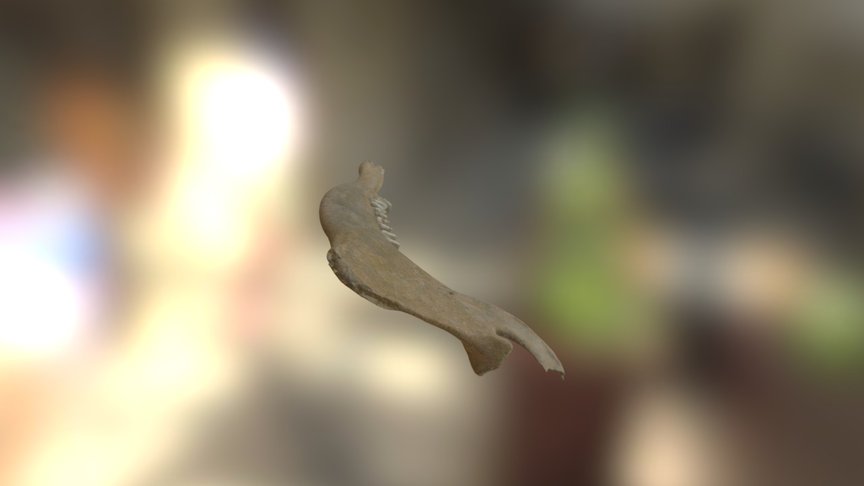
3D model
- Source
- Sketchfab
- Licence
- CC Attribution
- Commercial use
- cannot be read from the licence given — check the record
Smithsonian Open Access was not reached for this taxon, so this list is what the others held rather than everything there is.
The description on this site
- Source
- Wikipedia, “Cervalces”
- Licence
- CC BY-SA 4.0
This is what the site found, which is not the same as what exists.
Keep going
What may have been alongside itCervidae through timeFormations of the PleistoceneThe world it lived on
Occurrence data from the Paleobiology Database, CC BY 4.0. Scott 1885