Deinonychus antirrhopus
Deinonychus is a genus of dromaeosaurid theropod dinosaur with one described species, Deinonychus antirrhopus. This species, which could grow up to 3.4 meters (11 ft) long, lived during the Early and Late Cretaceous Period, about 115–98 million years ago. Fossils have been recovered from the U.S. states of Montana, Utah, Wyoming, and Oklahoma, in rocks of the Cloverly Formation and Antlers Formation, though teeth that may belong to Deinonychus have been found much farther east in Maryland.

Jonathan Chen · CC BY-SA 4.0 · via Wikipedia/Commons. May be a photograph of a specimen, or an artist’s reconstruction — an interpretation of a skeleton, since colour and soft tissue are almost never preserved.
On record
Recorded, not inferred- Sits inside
- DeinonychusPBDB
- Diet
- carnivorePBDB, for Dromaeosauridae
- Life habit
- ground dwellingPBDB, for Dromaeosauridae
- Motility
- actively mobilePBDB, for Theropoda
- Environment
- terrestrialPBDB, for Dromaeosauridae
Time the record covers
At least 3.1 million years on record.
The record covers at least 113.2 Mya to 110.1 Mya. No occurrence read is dated outside 121.4 Mya to 93.9 Mya.
35 occurrences of Deinonychus antirrhopus on record, most of them in the Early Cretaceous. Bar height is expected occurrences, not a count: each fossil is spread across the span it is dated to, so a tall narrow bar means tight dating and a low wide one means loose.
When
35 occurrencesThese are dates about fossils, not the animal: the record can only begin after it arose and end before it died out, so either end may reach further. Shares are expected occurrences: a fossil dated to a span is counted partly in each period it straddles. More on what this infers.
Found in
3 formations
- Cloverly Formation31
- Antlers Formation · Trinity Group3
- Holly Creek Formation · Trinity Group1
Loading coastlines…
The named rock units Deinonychus antirrhopus has been recovered from, largest first. Drawn where the rock is now, not where it formed.
Deinonychus antirrhopus and its relatives
Early CretaceousWhere Deinonychus antirrhopus and its relatives were recorded in the Early Cretaceous.
Found in the same rock
118 taxa- Tenontosaurus tilletti16 sites
- Crocodylia10 sites
- Naomichelys speciosa8 sites
- Testudines8 sites
- Mesoeucrocodylia7 sites
- Theropoda7 sites
- Ornithischia6 sites
- Pholidosauridae6 sites
- Anura5 sites
- Goniopholididae5 sites
- Paracryptodira5 sites
- Paramacellodidae5 sites
- Titanosauriformes5 sites
- Amiidae4 sites
- Ankylosauria4 sites
- Aves4 sites
- Bernissartiidae4 sites
- Caudata4 sites
- Osteichthyes4 sites
- Pleocyemata4 sites
- Sauropelta edwardsorum4 sites
- Tetanurae4 sites
- Acrocanthosaurus atokensis3 sites
- Actinopterygii3 sites
The Paleobiology Database records 35 sites for Deinonychus antirrhopus, and this reads all of them. The number is how many of those sites it was catalogued from too. The 24 sharing the most are listed.
This is not a list of everything alive at the time. It is only what has come out of the same ground as this animal and been written down.
Entered from
12 references- Stratigraphy and paleontology of the Cloverly Formation (Lower Cretaceous) of the Bighorn Basin area, Wyoming and Montana17
- Vertebrate paleontology of the Cloverly Formation (Lower Cretaceous), I: faunal composition, biogeographic relationships, and sampling7
- Additions to the vertebrate fauna of the Antlers Formation (Lower Cretaceous), southeastern Oklahoma2
- Gastroliths and Deinonychus teeth associated with a skeleton of Tenontosaurus from the Cloverly Formation (Lower Cretaceous), Montana, USA1
- A new vertebrate fauna from the Lower Cretaceous Holly Creek Formation of the Trinity Group, southwest Arkansas, USA1
- Ontogenetic dietary shifts in Deinonychus antirrhopus (Theropoda; Dromaeosauridae): insights into the ecology and social behavior of raptorial dinosaurs through stable isotope analysis1
- A description of Deinonychus antirrhopus bite marks and estimates of bite force using tooth indentation simulations1
- Further descriptions of the osteology of Deinonychus antirrhopus (Saurischia, Theropoda)1
- Postcranial ontogeny of Deinonychus antirrhopus (Saurischia, Theropoda)1
- New material of sauropod dinosaurs from the Cloverly Formation1
- Osteology, paleobiology, and relationships of the sauropod dinosaur Sauroposeidon1
- On a new specimen of the Lower Cretaceous theropod dinosaur <i>Deinonychus antirrhopus</i>1
Each of the 35 occurrences read was entered from one of these publications, ordered by how many each accounts for. This is not a search for papers mentioning the name. Entries link to doi.org where the Paleobiology Database holds an identifier, and to its own record where it does not. Relayed as the Paleobiology Database holds them, not checked against what they resolve to.
Media and terms
Media content3

Picture of Deinonychus antirrhopus
- Source
- Wikipedia/Commons
- Credit
- Jonathan Chen
- Licence
- CC BY-SA 4.0
- Commercial use
- the licence allows it
CT scan
- Source
- MorphoSource
- Licence
- In Copyright
- Commercial use
- cannot be read from the licence given — check the record
- Specimen
- Deinonychus antirrhopus · YPM:VP:YPM VP 053258
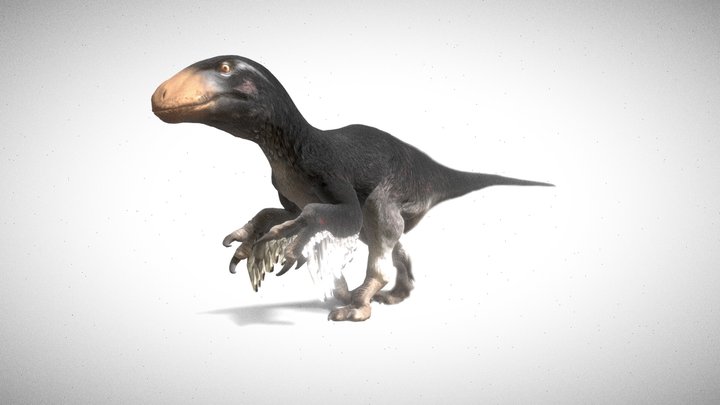
3D model
- Source
- Sketchfab
- Credit
- Nobilis the Palaeovespa
- Licence
- CC Attribution
- Commercial use
- cannot be read from the licence given — check the record
Smithsonian Open Access was not reached for this taxon, so this list is what the others held rather than everything there is.
The description on this site
- Source
- Wikipedia, “Deinonychus”
- Licence
- CC BY-SA 4.0
This is what the site found, which is not the same as what exists.
Keep going
What may have been alongside itDeinonychus through timeFormations of the Early CretaceousThe world it lived on
Occurrence data from the Paleobiology Database, CC BY 4.0. (Ostrom 1969)