Mysticeti
Searched as Mysticeti indet.. The Paleobiology Database treats Mysticeti as the accepted name.
Baleen whales, also known as whalebone whales, are marine mammals of the parvorder Mysticeti in the infraorder Cetacea, which use baleen plates in their mouths to sieve plankton from the water. Mysticeti comprises the families Balaenidae, Balaenopteridae (rorquals), Eschrichtiidae and Cetotheriidae. There are 16 species of baleen whales. While cetaceans were historically thought to have descended from mesonychians, molecular evidence instead supports them as a clade of even-toed ungulates (Artiodactyla). Baleen whales split from toothed whales (Odontoceti) around 34 million years ago.

PaleoNeolitic (montage creator) · CC BY-SA 4.0 · via Wikipedia/Commons. May be a photograph of a specimen, or an artist’s reconstruction — an interpretation of a skeleton, since colour and soft tissue are almost never preserved.
On record
Recorded, not inferred- Sits inside
- NeocetiPBDB
- Diet
- carnivore, suspension feederPBDB
- Life habit
- aquaticPBDB
- Motility
- actively mobilePBDB, for Cetacea
- Environment
- marinePBDB
Time the record covers
At least 27 million years on record.
The record covers at least 27.3 Mya to 11.7 ka. No occurrence read is dated outside 34.6 Mya to 0 Mya.
234 occurrences of Mysticeti on record, most of them in the Miocene. The Paleobiology Database records this as a living group. Bar height is expected occurrences, not a count: each fossil is spread across the span it is dated to, so a tall narrow bar means tight dating and a low wide one means loose.
When
234 occurrencesThese are dates about fossils, not the animal: the record can only begin after it arose and end before it died out, so either end may reach further. Shares are expected occurrences: a fossil dated to a span is counted partly in each period it straddles. More on what this infers.
Found in
104 formations
- Pisco Formation10
- Monterey Formation5
- Omma Formation5
- Pysht Formation4
- Makah Formation3
- El Cien Formation3
Loading coastlines…
The named rock units Mysticeti has been recovered from, largest first. Drawn where the rock is now, not where it formed. 80 further formations hold fewer occurrences each and are not listed. 86 occurrences have no formation on record, which is common for older literature.
Mysticeti and its relatives
MioceneWhere Mysticeti and its relatives were recorded in the Miocene.
Found in the same rock
1,986 taxa- Balaenopteridae35 sites
- Cetotheriidae35 sites
- Carcharodon hastalis24 sites
- Odontoceti24 sites
- Otodus megalodon23 sites
- Balaenidae21 sites
- Balaenoptera20 sites
- Physeteridae20 sites
- Phocidae18 sites
- Delphinidae17 sites
- Ziphiidae17 sites
- Myliobatis16 sites
- Carcharodon carcharias15 sites
- Isurus14 sites
- Carcharhinus13 sites
- Phocoenidae11 sites
- Herpetocetus10 sites
- Kentriodontidae9 sites
- Monachinae9 sites
- Spheniscidae9 sites
- Sula9 sites
- Carcharias taurus8 sites
- Cetacea8 sites
- Delphinoidea8 sites
The Paleobiology Database records 1,411 sites for Mysticeti, and this reads 240 of them. The number is how many of those sites it was catalogued from too. The 24 sharing the most are listed.
This is not a list of everything alive at the time. It is only what has come out of the same ground as this animal and been written down.
Entered from
116 references- Determining the ages of sub-fossil cetacean remains, found in the Carse of Stirling, Scotland33
- A list of fossil cetaceans in Japan14
- A review of the Tertiary fossil Cetacea (Mammalia) localities in Australia11
- Exceptional occurrence of fossil baleen in shallow marine sediments of the Neogene Pisco Formation, Southern Peru8
- Neogene baleen whales (Cetacea: Mysticeti) from Transylvania and Oltenia5
- Fossil cetaceans from the distribution area of the Omma Formation in Kanazawa, Ishikawa Prefecture, Japan5
- Paleoecology of whale-fall habitats from deep-water Oligocene rocks, Olympic Peninsula, Washington state5
- Miocene cetacean remains from Mediterranean Spain5
- Mark D. Uhen's opinions4
- A Review and Status of Fossil Cetacean Research in Taiwan4
- Systematics, biostratigraphy and evolutionary pattern of the Oligo-Miocene marine mammals from the Maltese Islands4
- The sequence of fossil marine mammal assemblages in Mexico4
Each of the 234 occurrences read was entered from one of these publications, ordered by how many each accounts for. This is not a search for papers mentioning the name. 104 further references are not listed. Entries link to doi.org where the Paleobiology Database holds an identifier, and to its own record where it does not. Relayed as the Paleobiology Database holds them, not checked against what they resolve to.
Media and terms
Media content2

Picture of Mysticeti
- Source
- Wikipedia/Commons
- Credit
- PaleoNeolitic (montage creator)
- Licence
- CC BY-SA 4.0
- Commercial use
- the licence allows it
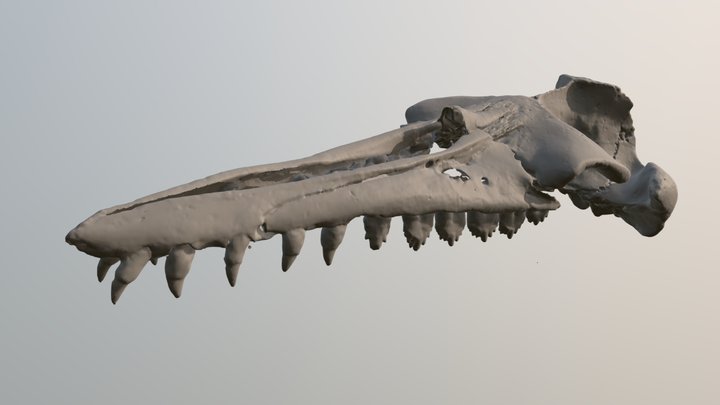
3D model
- Source
- Sketchfab
- Licence
- CC Attribution-NonCommercial-NoDerivs
- Commercial use
- the licence does not allow it
Smithsonian Open Access and MorphoSource were not reached for this taxon, so this list is what the others held rather than everything there is.
The description on this site
- Licence
- CC BY-SA 4.0
This is what the site found, which is not the same as what exists.
Keep going
What may have been alongside itNeoceti through timeFormations of the MioceneThe world it lived on
Occurrence data from the Paleobiology Database, CC BY 4.0. (Cope 1891)